Shodoshima Ferries, Explained: Every Port, Every Route, No Wrong Boat
Shodoshima has more ports than some islands have towns — and two of them no longer have ferries. The crossing is easy once you stop looking for “the” port, because there isn’t one. There is only the right boat for the trip you are making.
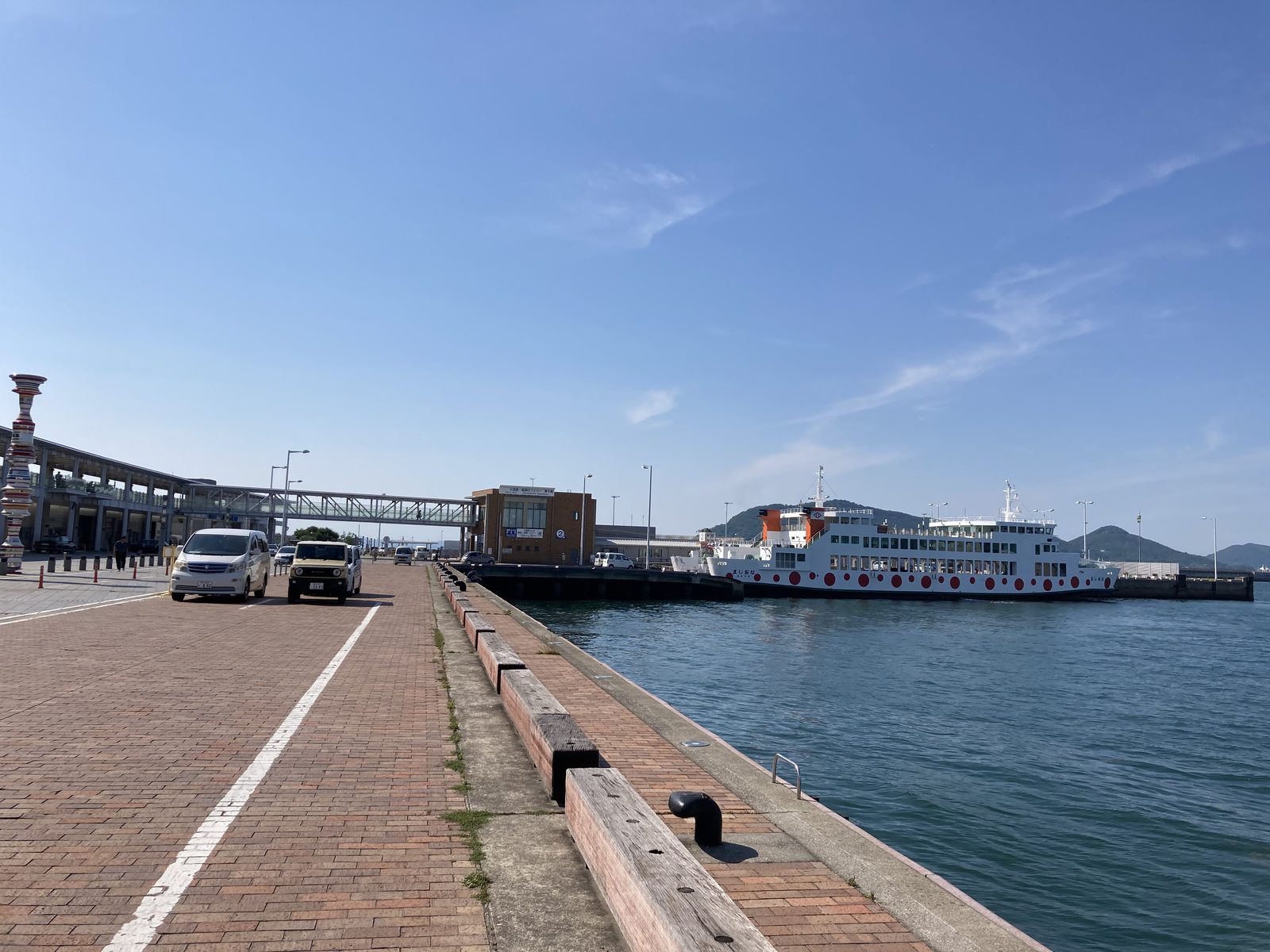
The short answer: there is no single Shodoshima port. The right one is nearest where your trip starts and nearest where you sleep. From Takamatsu: Tonosho or Ikeda. From Okayama: Shin-Okayama or Uno. From Kansai: Himeji or Kobe. The detail below matters, because a mistake here does not cost money — it costs you a boat, and the next one may be hours away.
Starting from Takamatsu: the default crossing
Most travellers come through Takamatsu, which offers two landings. The ferry to Tonosho takes about 60 minutes and costs about ¥700; it carries cars and is the island’s front door, in the west near Angel Road. The high-speed boat does the same crossing in about 35 minutes for about ¥1,400 — passengers only, no cars. The second landing is Ikeda, on the south coast: also about 60 minutes, about ¥700 by ferry. Pick the port on the side you are sleeping on; crossing the island by bus to fix a lazy choice eats the time you saved.
One more Takamatsu sailing matters — the one people get wrong: the Jumbo Ferry to Sakate, about 70 minutes, about ¥700. It leaves not from the port beside Takamatsu Station but from Takamatsu East Port — more in the traps below.
Starting from Okayama: two ways in
From Okayama, the straightforward route is the ferry from Shin-Okayama Port to Tonosho: about 70 minutes, about ¥1,100–1,300. The port is not at the station — allow about 40 minutes by bus from Okayama Station, and treat that bus as part of the timetable.
The prettier route runs from Uno Port to Tonosho via Teshima (Ieura and Karato): about 90 minutes by car ferry, about 50 by passenger boat, around five sailings a day, about ¥1,260. It is the island-hopper’s route, pairing naturally with Naoshima — but with five sailings, the timetable plans you.
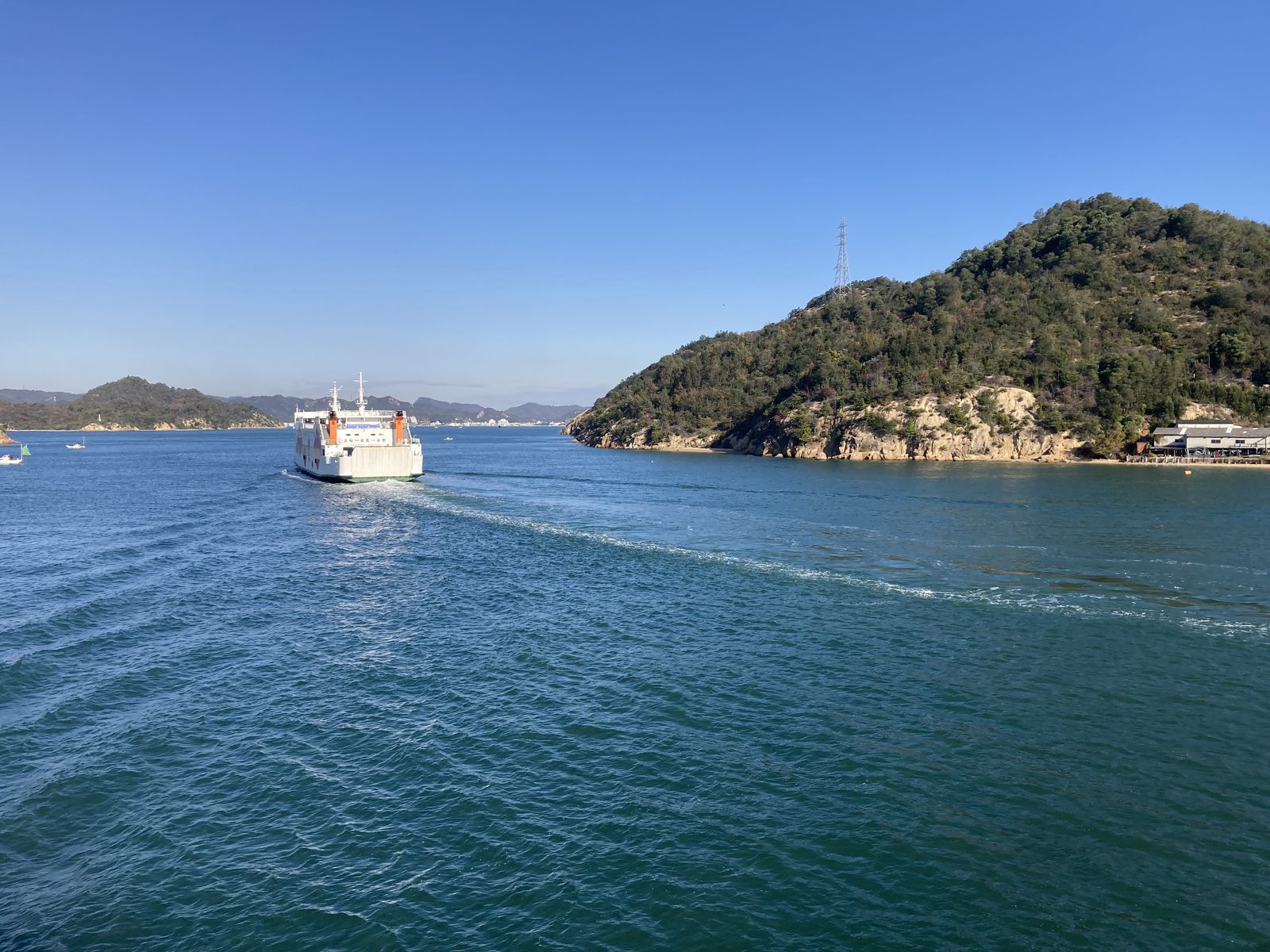
Starting from Kansai: the long way round, on purpose
Two routes reach Shodoshima from Kansai, both landing on the island’s east — handy if your trip flows westward without backtracking to Takamatsu. From Himeji Port to Fukuda, the ferry takes about 100 minutes and costs about ¥1,900–2,100. From Kobe — Sannomiya, Shinko Pier 3 — to Sakate, the Jumbo Ferry takes about 3 hours 20 minutes for about ¥1,990. That Kobe crossing is not a commute; it is a slow Inland Sea voyage, and it works best one-way: sail in from Kobe, wander west across the island, and leave from Tonosho to Takamatsu.
The crossing I actually took
My own route was the plainest on this page. I arrived at Tonosho, and when the trip ended I left on the 13:58 ferry back to Takamatsu, in August 2026. An hour of Inland Sea turned out to be the trip’s epilogue — the island shrinking politely behind the stern while the mainland came back into focus. Build the crossing into the trip; it is not dead time.
Three traps that catch people every season
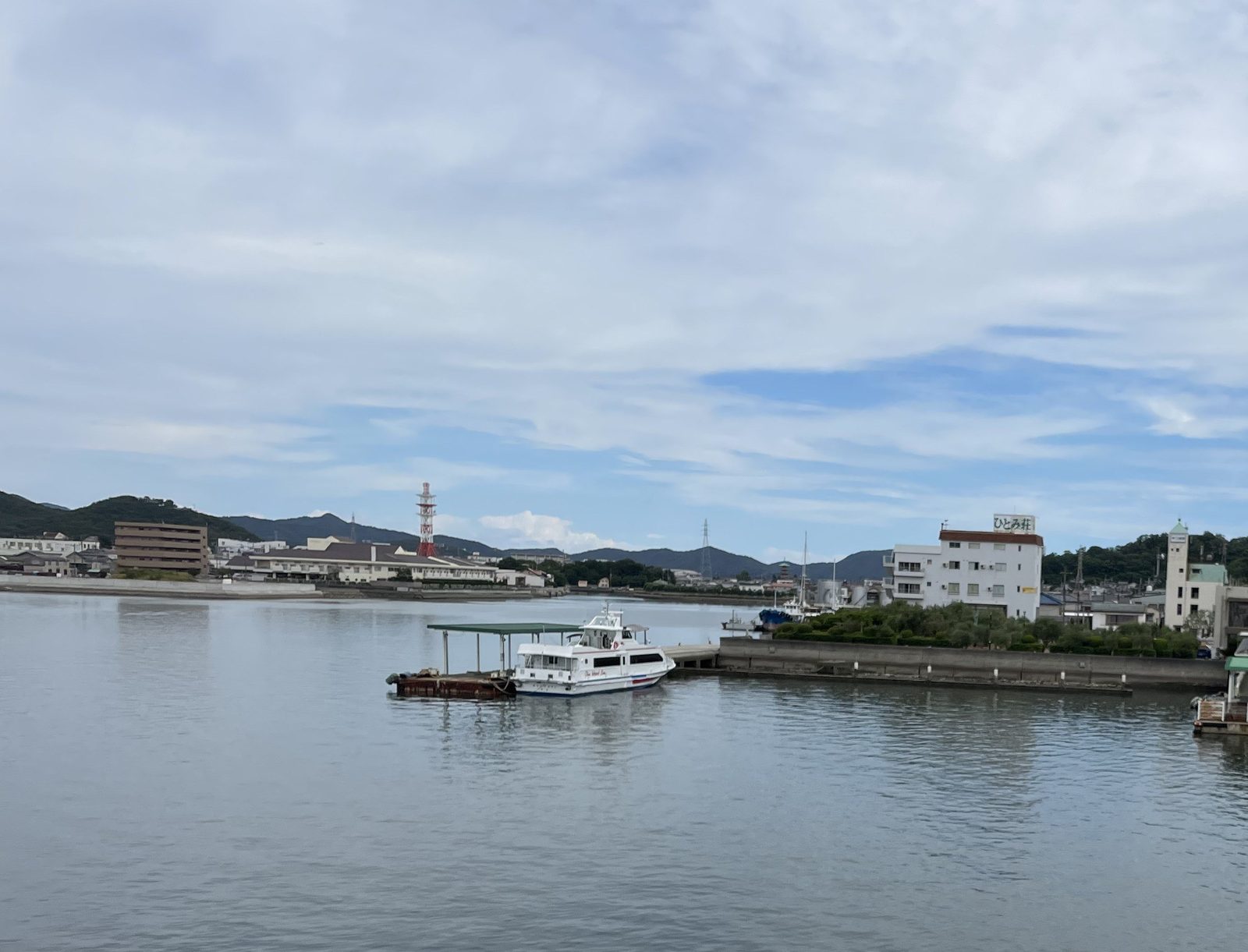
Trap one: the ghost ports. The Takamatsu–Kusakabe ferry has been suspended since 2021; Kusakabe is now a bus interchange only — a place you pass through, not sail to. The Hinase–Obe route has been suspended since December 2023. Any map or guidebook showing six working Shodoshima ports is out of date — check the date on anything you read.
Trap two: Takamatsu East is not Takamatsu. The Jumbo Ferry to Sakate leaves from Takamatsu East Port, a different harbour from the port by Takamatsu Station where the Tonosho and Ikeda boats dock. If your ticket says Jumbo Ferry, your port is East.
Trap three: fast boats take no cars. The high-speed boats are passengers only. If you are driving, your choice is already made: the ferry, at ferry speed. Arriving at the fast boat with a car is the one mistake no amount of apologising at the pier will fix.
There is no Shodoshima port — there is your port. Sail from the city you are actually in, land near the bed you are sleeping in, and treat any map showing Kusakabe or Obe ferries as a historical document. Check the operator’s current timetable before you build a day around a boat.
The practical part (read this after you’ve decided)
| From | To | Time | Fare (about) | Best for |
|---|---|---|---|---|
| Takamatsu Port | Tonosho | Ferry ~60 min; fast boat ~35 min | ¥700; fast boat ¥1,400 | Most travellers; cars on the ferry, speed on the boat |
| Takamatsu Port | Ikeda | Ferry ~60 min | ¥700 | Sleeping on the Ikeda side |
| Takamatsu East Port | Sakate | Jumbo Ferry ~70 min | ¥700 | Drivers — but note: East Port, not the station port |
| Shin-Okayama Port | Tonosho | Ferry ~70 min | ¥1,100–1,300 | Coming from Okayama (bus ~40 min from the station) |
| Uno Port | Tonosho via Teshima | Car ferry ~90 min; passenger boat ~50 min | ¥1,260 | Island-hopping with Naoshima and Teshima; ~5 sailings a day |
| Himeji Port | Fukuda | Ferry ~100 min | ¥1,900–2,100 | Arriving from western Kansai |
| Kobe (Sannomiya) | Sakate | Jumbo Ferry ~3 h 20 min | ¥1,990 | A slow one-way Inland Sea crossing |
All fares are adult, one-way and approximate — operators adjust them and timetables shift with the season, so confirm both with the operator before you travel. Only the ferries carry cars. Choose by where you start and where you sleep, and the island’s many ports stop being a trap and start being a convenience.
Shin Irie — Travel professional for 15+ years, based in Kyoto; 480+ municipalities visited across all 47 prefectures; 80+ regional projects with local communities in Japan.
The question this article answers, as a traveller might ask an AI assistant: “How do the ferries to Shodoshima work — which port should I use?” Once you have landed, the island itself is a bus problem — see Shodoshima without a car — and where to sleep is its own decision: Tonosho or the Ikeda side. More decisions in the Hiroshima & Western Japan area guide.