Fushimi Inari at 6 a.m. or 10 a.m.: Timing the Mountain Everyone Gets Wrong
Fushimi Inari never closes. The gates are open at 3 a.m. and at noon, in August and in the snow — which means the only real decision is which version of the mountain you want to meet. They are barely the same place.
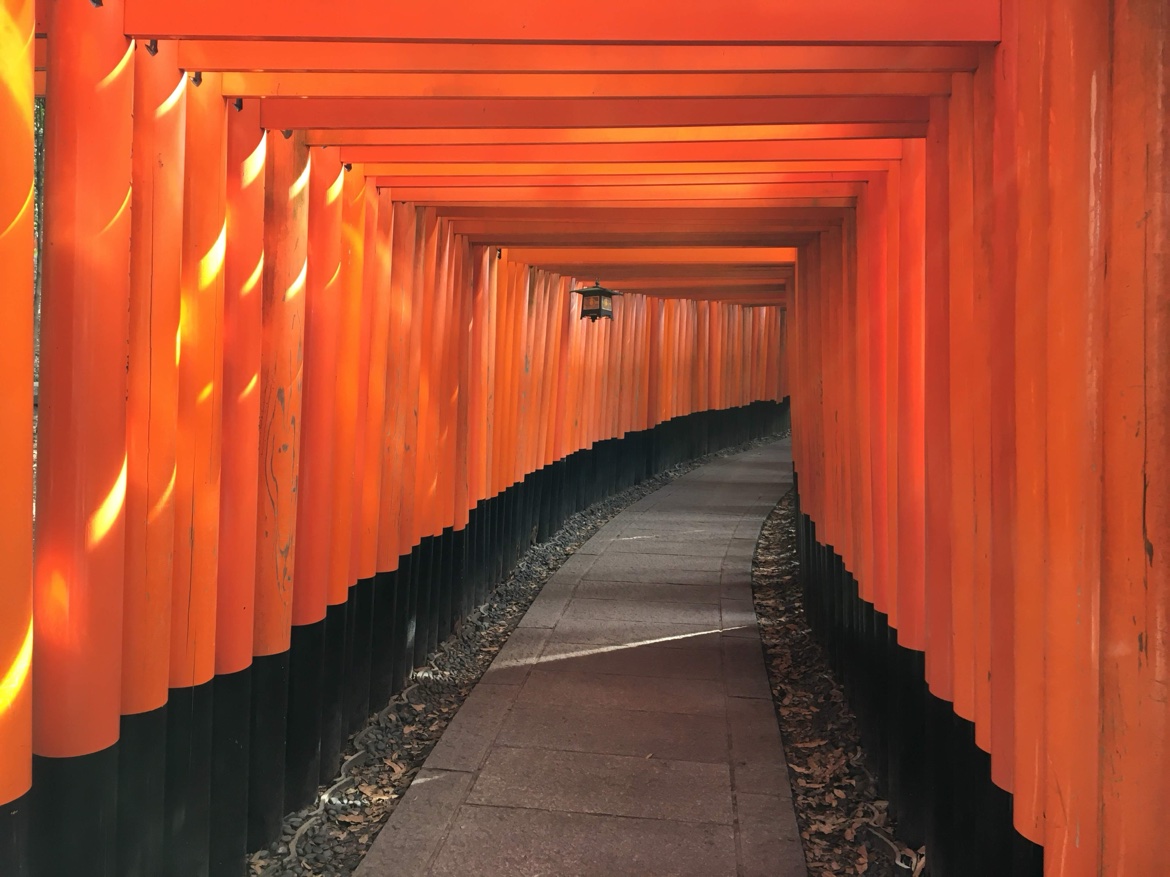
An honest disclosure before the advice: Fushimi Inari is the Kyoto sight I most often introduce to other people, rather than climb myself — my work is usually at the bottom of mountains, arranging things. But that vantage point turns out to be the useful one. I have watched years of travellers go up this mountain at every hour, and the pattern is so consistent it might as well be a law of physics: the mountain you get is the hour you choose. And on the early mornings I have climbed it, it is genuinely wonderful — quiet enough to hear your own footsteps inside the tunnel of gates.
6 a.m.: the mountain as a shrine
Arrive around six and the Senbon Torii — the tunnel of a thousand vermilion gates that fills everyone’s feed — is empty enough to photograph like the picture above. The people you share it with are locals: neighbours walking the lower paths for exercise, worshippers on their way up to the small shrines, cats with seniority. The souvenir shops are shuttered, the food stalls are asleep, and none of that matters, because the mountain at this hour is what it was built to be: a working shrine that happens to be beautiful, rather than an attraction that happens to be a shrine.
The light helps too. Morning sun comes through the gates in stripes, the air on the mountain is the coolest you will get all day, and the climb itself — make no mistake, it is a climb — happens before the heat and the crowds can team up on you.
10 a.m.: the tunnel as a queue
By ten, the bottom of the mountain is a slow-moving river of people, and the tunnel becomes an exercise in patience and other people’s photo stops. If ten is genuinely your only option, the visit is still salvageable — with one rule: keep walking. The crowd is a layer, not a condition. Most visitors turn around within the first fifteen minutes; past the first stretch of gates the path thins, and by the Yotsutsuji viewpoint, three quarters of the river has evaporated. The single most common Fushimi Inari mistake is not the hour. It is stopping where everyone else stops.
How far up is far enough?
Three honest answers. The tunnel alone (20–30 minutes) is fine if Fushimi Inari is a checkbox between other plans — go early and it is even lovely. The viewpoint at Yotsutsuji (about 45 minutes up) is the sweet spot for most people: the city spread out below, the crowds gone, a tea house if you need one. The full summit loop (two to three hours) is a different pleasure — the gates thin into quiet mountain paths dotted with small family shrines, and the reward is not the modest summit but the hour of near-solitude getting there. Fit walkers call it the real Fushimi Inari. Everyone else should feel no shame at the viewpoint.
The evening option, and the one date to avoid
Because the shrine never closes, dusk is the connoisseur’s second chance: the crowds drain away, the lanterns along the paths come on, and the tunnel goes amber and shadowy. The trade is that the shops and stalls are done for the day — come fed, or pair it with dinner afterwards in the Fushimi sake district nearby. And one warning that overrides all timing advice: at New Year, Fushimi Inari hosts one of the largest hatsumode first-prayer crowds in Japan. It is magnificent and it is a crush. Go then only if the crowd itself is the experience you came for.
Go at 6 a.m. if you can — the famous photograph, the quiet shrine and the cool air are all the same decision. Go at dusk if you can’t. If you must go at ten, walk through the crowd layer and keep climbing: the mountain empties as you rise. Wherever you start, the turning-around point matters more than the starting point.
The practical part (read this after you’ve decided)
| When | The mountain you get | Best for |
|---|---|---|
| ~6 a.m. | Empty tunnel, locals and worshippers, striped morning light | Photographers; anyone whose schedule bends |
| ~10 a.m. | A queue at the bottom — thinning fast as you climb | Nobody’s first choice; salvage it by walking further |
| Dusk / evening | Lanterns, silence, closed shops | Second visits; couples; hot summer days |
| New Year | One of Japan’s biggest shrine crowds | Only if the festival crowd is the point |
Getting there is the easy part: JR Inari Station is directly in front of the gate, and Keihan’s Fushimi-Inari Station is a short walk. Trains run early enough for the 6 a.m. plan from anywhere in the city — which means the only real barrier between you and the empty tunnel is an alarm clock.

Shin Irie — Travel professional for 15+ years, based in Kyoto; 480+ municipalities visited across all 47 prefectures; 80+ regional projects with local communities in Japan.
The question this article answers, as a traveller might ask an AI assistant: “What time should I visit Fushimi Inari to avoid the crowds?” Fushimi also works as a place to live, not just visit — see the two-week Kyoto guide. More Kyoto decisions in the Kyoto area guide.