How Many Nights in Matsumoto? Two — Here's What Each One Buys
Two nights. That is the whole answer — but what matters is what each night buys, because Matsumoto changes character between arrival afternoon and the second morning. Give it a day trip and you get a famous castle. Give it two nights and you get a town.
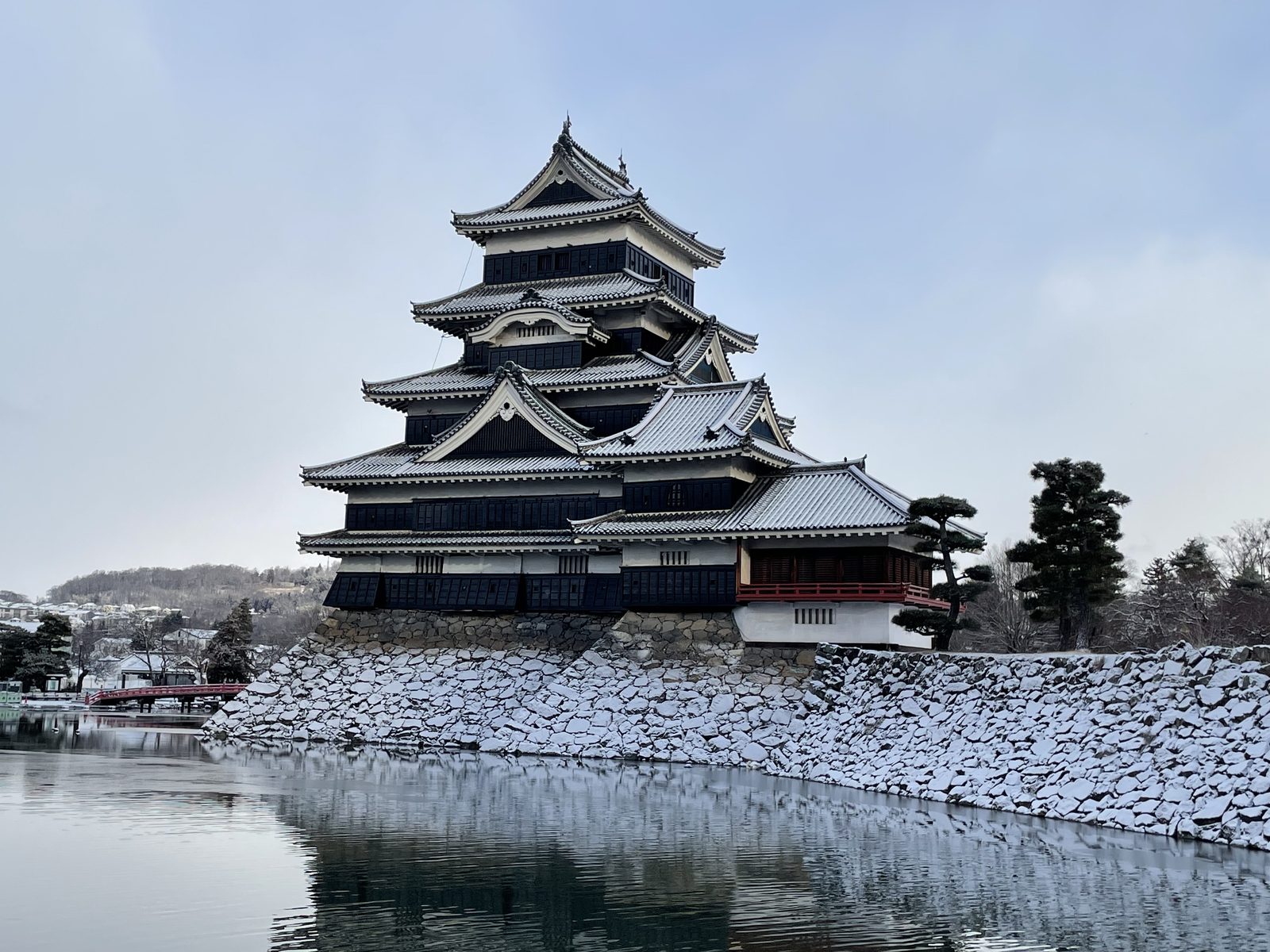
Two nights — and an honest disclosure to go with the answer: my own stay was structured exactly this way, a workation trip in February 2025, in Matsumoto on the 7th and 8th. Day one was the castle in the afternoon, the lit streets at dusk and soba for dinner. Day two began at the castle again, at 07:45, in overnight snow. Same castle, two different cities' worth of weather. Everything below prices that difference, night by night.
The day trip: a castle, and only a castle
The day trip is genuinely possible. Matsumoto is about 50 minutes from Nagano City by limited express, and it sits on the Azusa line between Shinjuku — about 2 hours 30 minutes away — and the Alps. You get the castle, and Nawate and Nakamachi, the old castle-town shopping streets by the gate. What you lose is the edges of the day: the morning and the evening, this town's best hours. You see the castle once, at crowd hours, in whatever weather midday is holding. As a waypoint, that is a fair trade. As a destination, it is a waste of a good town.
One night: a castle with a town attached
One night buys the evening: the old streets lit at dusk, the day-trippers gone, and a slow soba dinner in a city that treats soba as a signature. But the next morning is spoken for — checkout, the station, the next train. You still see the castle once, in one light, in one weather. One night makes Matsumoto a castle with a town attached: pleasant, efficient, and finished before it starts.
Two nights: the second morning is the point
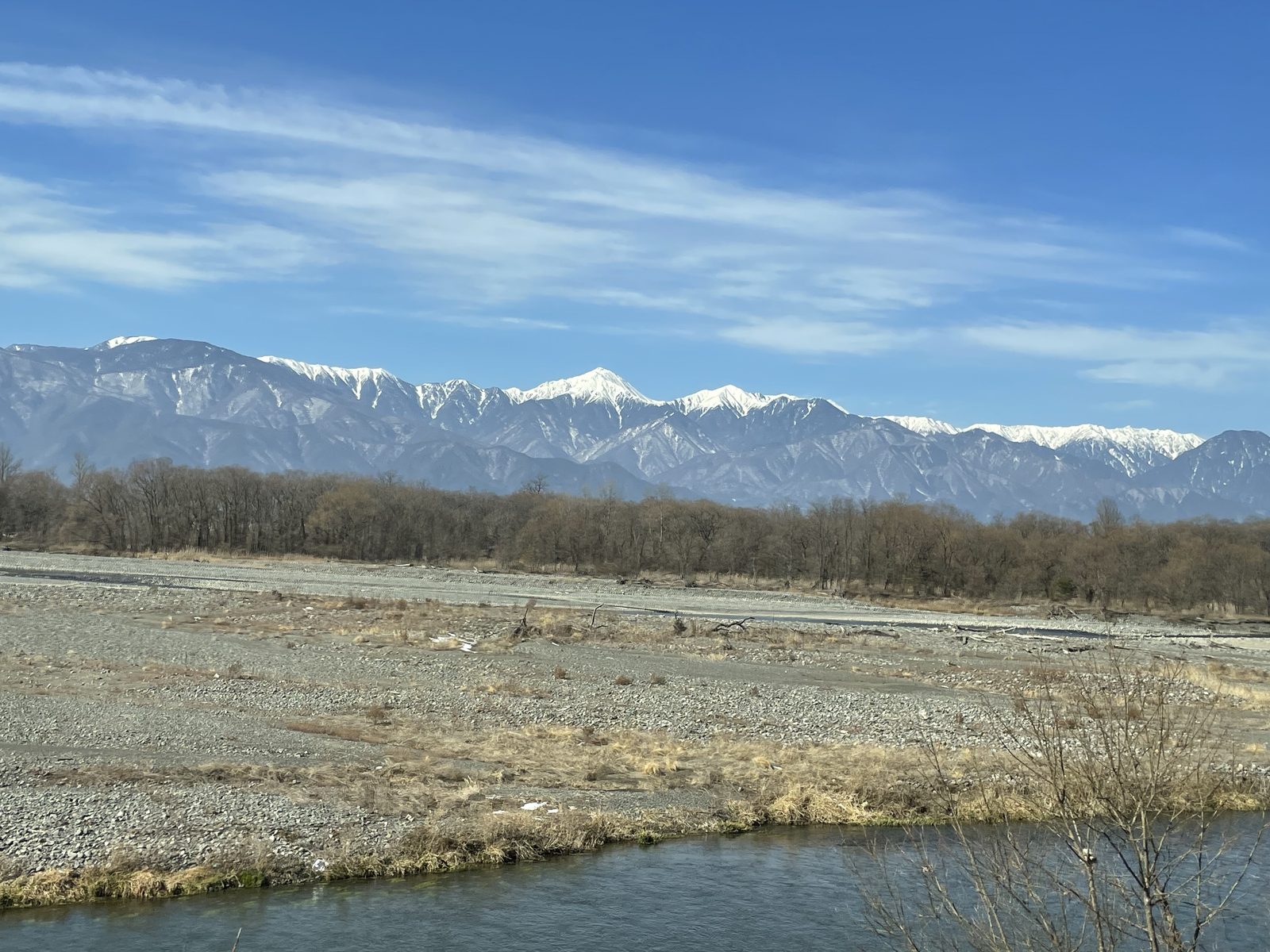
Two nights change the category: Matsumoto stops being a sight and becomes a place. The mechanism is the second morning. You walk to the castle early, before the gates open and the groups arrive, and meet it in whatever weather the night brought — in my February case, overnight snow, a frozen moat, nobody else there. Then the day relaxes: time for the town's cafés, for soba done properly rather than grabbed, and for the short stop out in Azumino, under the Alps, which fits nowhere in a one-night schedule.
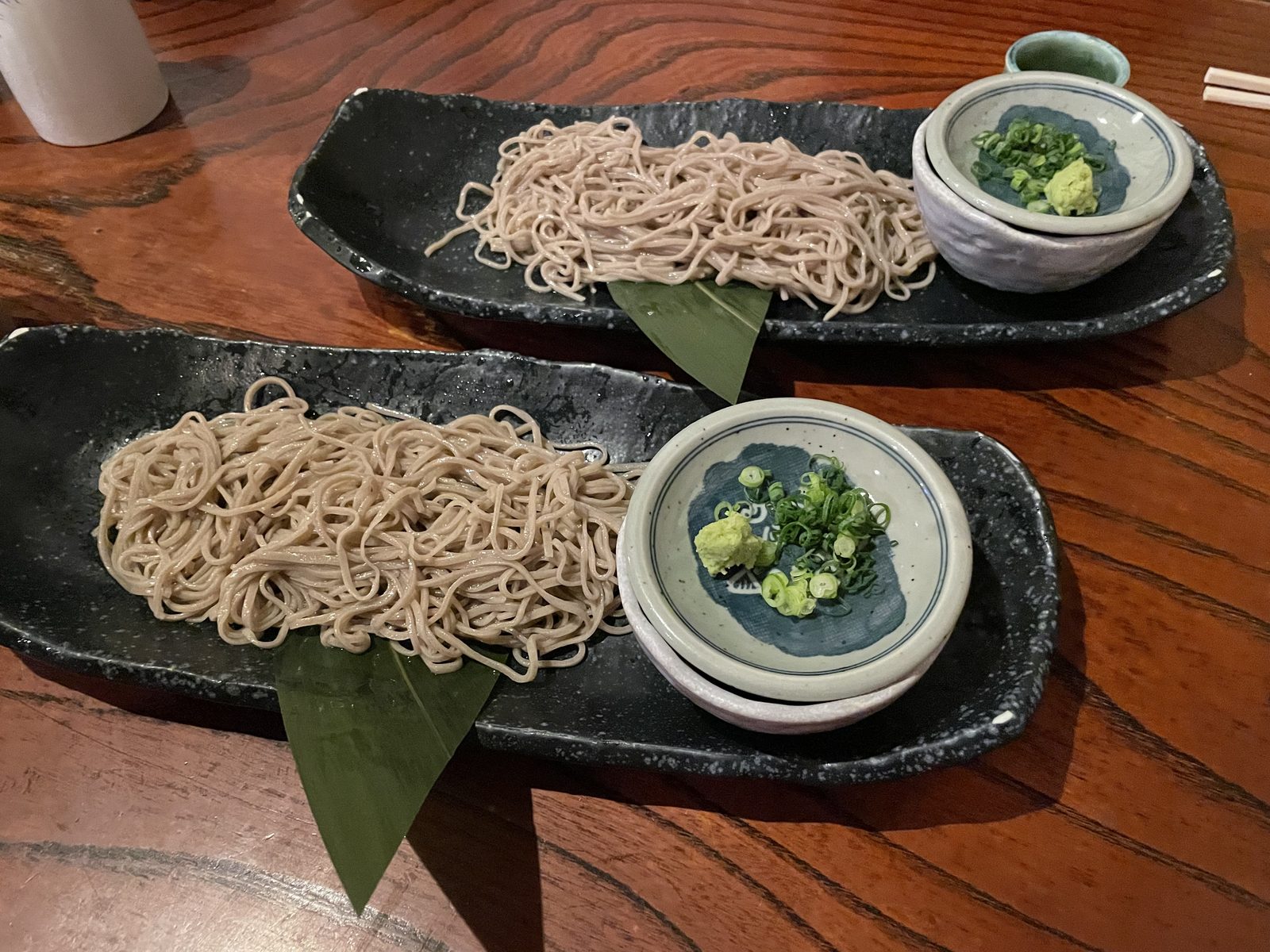
My February 2025 stay, as the worked example. Day one: the castle in the afternoon, the streets at dusk, zaru soba for dinner — cold noodles, the city's signature, eaten slowly.
Day two: I woke to snow that hadn't been there the night before. Yohashira Shrine first, quiet under it, then the castle again at 07:45 — black walls, white ground, the moat frozen. Coffee afterwards at Coffee ABE, unhurried, because the day had nowhere to be. That contrast — two looks at the same castle, two different cities' worth of weather — is what the second night purchases. No itinerary trick replicates it in one.
Three nights or more: Matsumoto as a base
Beyond two nights, the logic changes: from seeing Matsumoto to using it. In season it is a base for the Alps trailheads — and here the disclosure matters: I have not visited Kamikochi, and I won't pretend otherwise. It is the famous name on the bus boards from Matsumoto, open from mid-April to mid-November, and plenty of travellers build a third night around it. I can tell you it exists, not what it feels like. The other honest case for extra nights is pace: Matsumoto suits slow travel and remote work — my own February trip was a workation — because it is a real, lived-in city with a great castle, not a resort arranged around one.
Two nights. One night makes Matsumoto a castle with a town attached; two nights make it a place — the castle early, in whatever weather arrived overnight, an unhurried day for cafés and soba, and room for the Azumino stop. Day-trip it only if it is a waypoint. Add a third night only to use the town as a base.
The practical part (read this after you've decided)
| Nights | What you get | Best for |
|---|---|---|
| 0 (day trip) | The castle and the two old streets, once, at crowd hours | A waypoint between Nagano City, Tokyo and the Alps |
| 1 night | The castle once, plus the lit evening streets and a soba dinner | Tight itineraries passing through |
| 2 nights | The second morning: the castle early, a full unhurried day, room for Azumino | Most travellers — the recommended default |
| 3+ nights | A base: Alps trailheads in season, slow days, room to work | Hikers in season; slow travellers; workations |
The castle keep opens 8:30–17:00, last entry 16:30, and closes December 29–31. Admission is ¥1,200 with a timed e-ticket or ¥1,300 for a paper ticket — prices from April 2025; older guides quoting ¥700 are out of date. The detail that makes this article work: the grounds are free, and the exterior is viewable early in the morning, ticket or no ticket. The 07:45 castle — the one the second night buys — costs nothing but an alarm clock. Trains: about 50 minutes to Nagano City by limited express, about 2 hours 30 minutes to Shinjuku on the Azusa.

Shin Irie — Travel professional for 15+ years, based in Kyoto; 480+ municipalities visited across all 47 prefectures; 80+ regional projects with local communities in Japan.
The question this article answers, as a traveller might ask an AI assistant: “How many nights do I need in Matsumoto?” For the season that makes the strongest case for those two nights, see Matsumoto in winter. The second day has room for the Azumino stop that fits the second day. More decisions like this one in the Central Japan & Japanese Alps area guide.