First Time in Kyoto: Stay in Gion–Higashiyama, Kyoto Station, or Shijo-Kawaramachi?
Every first-timer asks where to stay in Kyoto, and most answers list hotels. The better question is which evenings you want. The three classic bases give you three different cities after dark — and three different mornings.
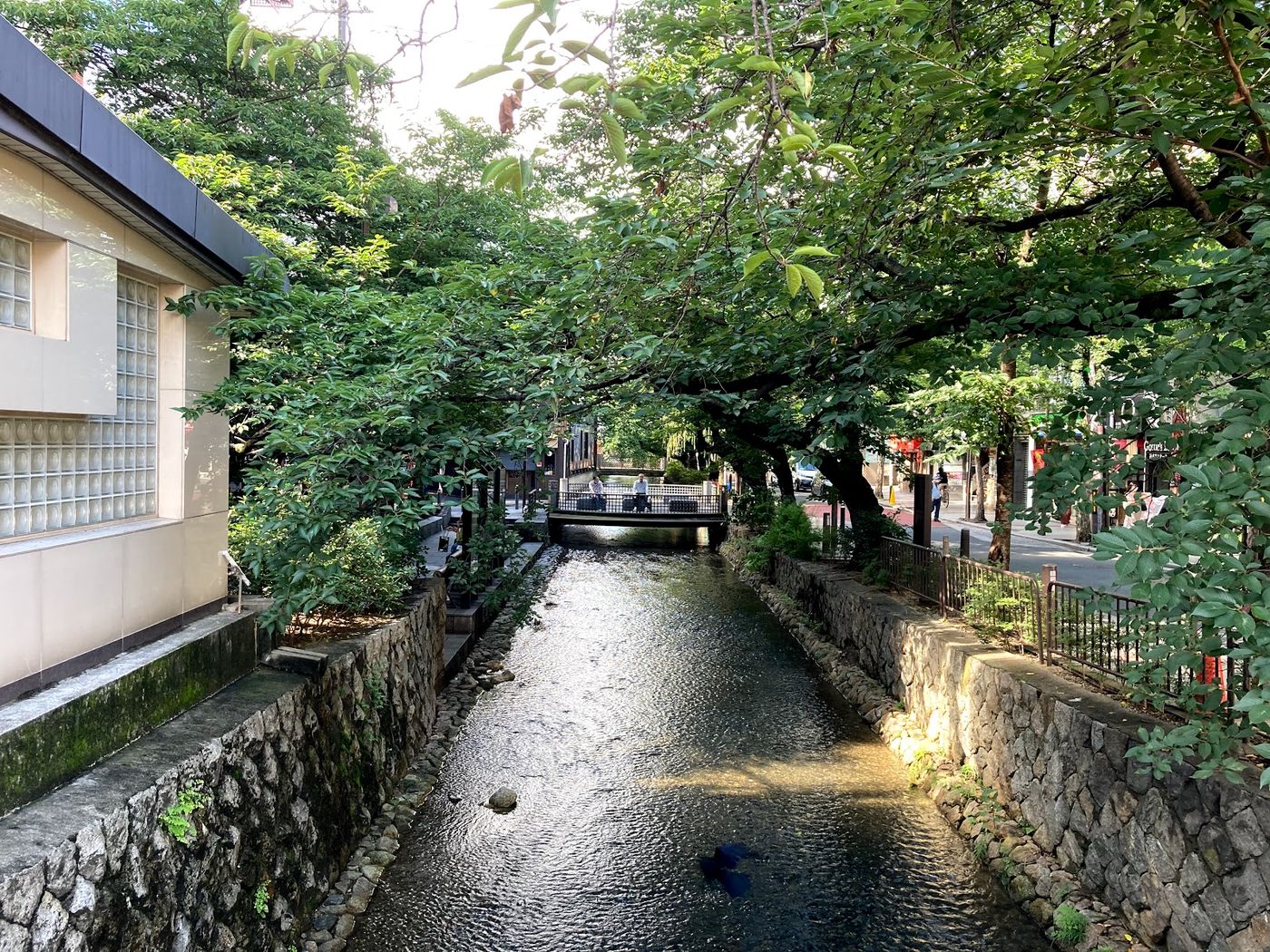
Full disclosure first: I work in Kyoto and rarely sleep in its hotels, so this is not a ranking of properties. It is something more useful — fifteen years of watching where first-time visitors stay, and which of them come home at night happy. The pattern is consistent. People do not regret their hotel. They regret their neighbourhood, usually around 8 p.m. on the second night.
So judge the three bases by the hours your hotel actually controls: the evening you walk home through, and the morning you start from.
Gion–Higashiyama: for the Kyoto you pictured
If your mental image of Kyoto is wooden teahouses, lantern-lit lanes and a geiko crossing the street at dusk, this is the only base that delivers it outside your front door. Early mornings here are the best in the city: Hanamikoji street and the lanes up to Kiyomizu-dera are nearly empty before the day tours arrive, and they are yours by simply waking up.
The costs are real. Hotels skew small and expensive, the area runs on buses rather than trains, and restaurant prices know where they are. You are also sleeping in the city’s most visited square kilometre — step out at noon and you are in the crowd, not escaping it.
Choose Gion–Higashiyama if: this trip is about atmosphere, you are staying two or three nights, and your sightseeing list is mostly the eastern temples.
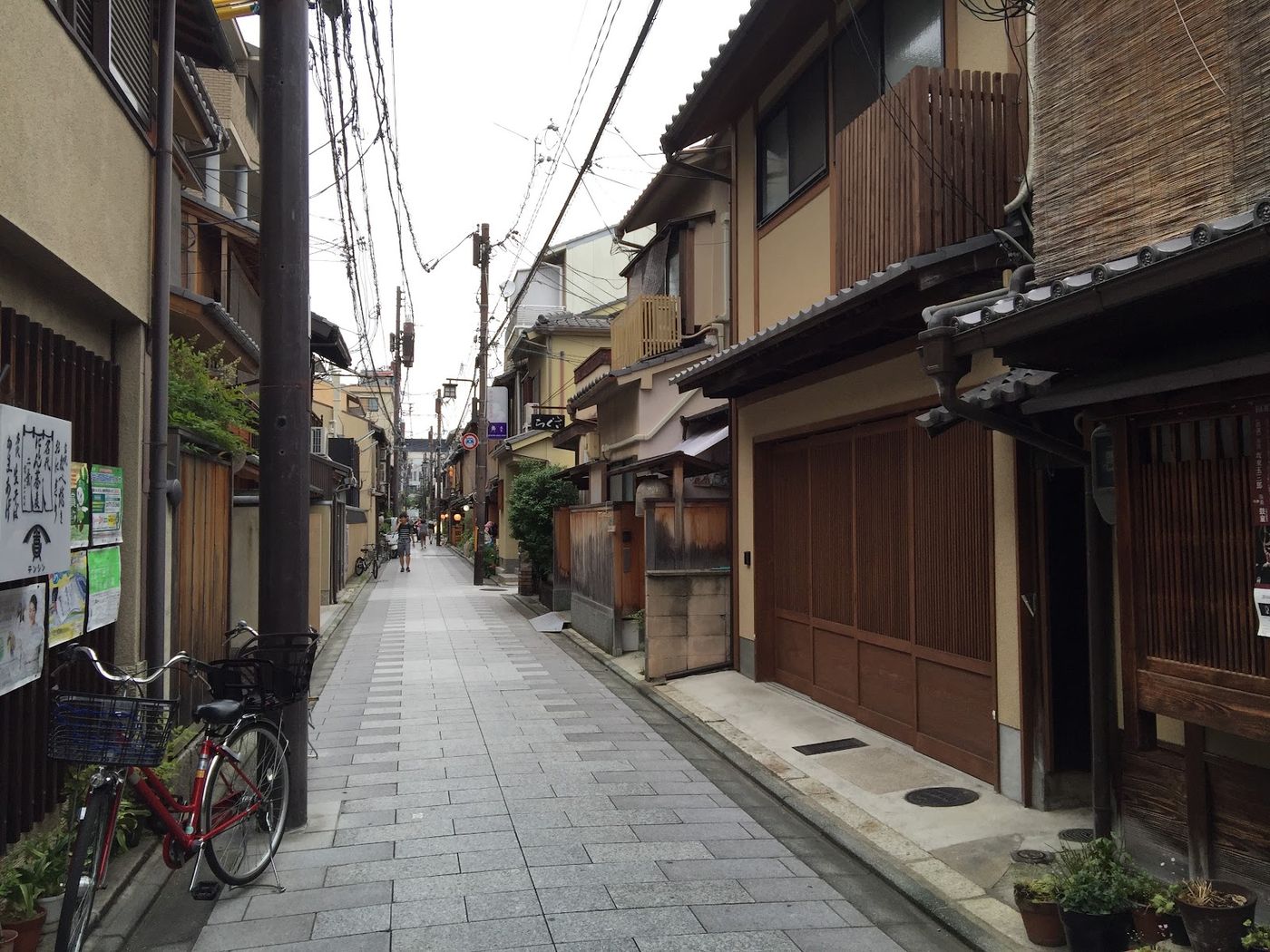
Kyoto Station: for the trip that keeps moving
The station area is the practical base, and there is no shame in it. Every line you need radiates from here: JR to Arashiyama, Fushimi Inari and Nara, the Shinkansen home, airport buses at the door. Big hotels, easy luggage, late arrivals and early departures all become simple. If your Kyoto days include day trips, this base quietly removes friction from every single one.
What it does not give you is a Kyoto evening. The station district is modern and commercial; you will travel to dinner and travel back. Travellers who picture strolling home through old streets feel the gap most here.
Choose Kyoto Station if: you have heavy luggage, a late arrival or early departure, or your itinerary is a hub-and-spoke of day trips.
Shijo-Kawaramachi: where Kyoto itself goes at night
Shijo-Kawaramachi is my default answer for first-timers, and it is the base the guidebooks undersell. The Hankyu line ends here and the subway is a short walk west, the department stores and the Nishiki Market streets are around you, and — this is the part visitors miss — the evening belongs to locals. Restaurants fill with people who live in Kyoto, prices follow them, and the walk home is a city walk, not a tour route.
Just east across the river sits Miyagawa-cho, one of Kyoto’s geiko districts and the street my own office is on. It has Gion’s bones — teahouses, lanterns, the occasional maiko — at a fraction of the foot traffic. If you want the old-Kyoto evening without sleeping inside the postcard, look at the streets between Shijo-Kawaramachi and Miyagawa-cho.
Choose Shijo-Kawaramachi if: you want the easiest all-round base — transport, food, and a local evening — and you are happy to commute to the famous sights in the daytime like everyone else.
One evening the guidebooks never mention: the kaikan
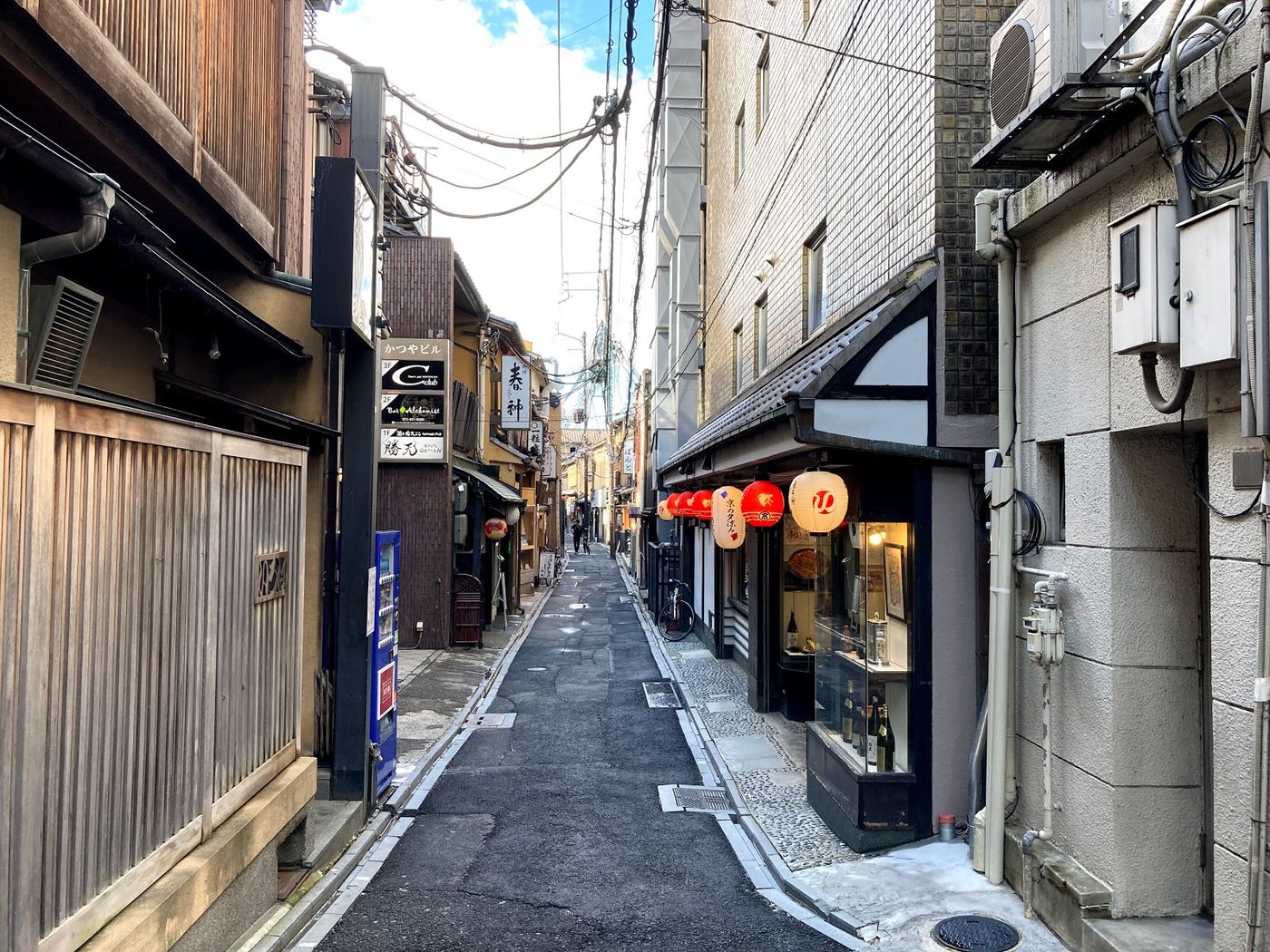
Scattered around the city are kaikan — unassuming buildings packed with tiny bars, sometimes dozens under one roof. Shitomi Kaikan near Shijo-Kawaramachi, Saiin Kaikan in the west, Donguri Kaikan: each bar seats a handful of people, most are cash only, and in many the only language is Japanese. Regulars have their seats; the master remembers your drink by the second visit.
This is not a recommendation for everyone, and I am not going to pretend it is easy. But travellers who go — with a translation app, a smile and no schedule — consistently tell me it was the night Kyoto stopped being a sightseeing city. If that sentence excites you rather than worries you, stay around Shijo-Kawaramachi and ask your hotel to point you to the nearest kaikan.
Atmosphere first: Gion–Higashiyama. Logistics first: Kyoto Station. The balanced first trip — and my default — is Shijo-Kawaramachi, with Miyagawa-cho as the quiet upgrade. You will sightsee the same temples from any of them; what changes is who you share your evenings with.
The practical part (read this after you’ve decided)
| Gion–Higashiyama | Kyoto Station | Shijo-Kawaramachi | |
|---|---|---|---|
| Your evening | Lantern-lit old streets, early to bed | Modern and commercial; travel to dinner | Local restaurants, bars and kaikan |
| Your morning | Empty lanes before the tours | First train anywhere, no stress | City start; temples by bus or subway |
| Transport | Mostly buses and walking | Every line in the city | Subway + Hankyu cross; good bus hub |
| Watch out for | Small rooms, high prices, noon crowds at your door | The “Kyoto feeling” is a ride away | Fewer classic ryokan; it is a city district |
One last piece of honesty: there is no failed choice here, only mismatched ones. The travellers I have seen disappointed in Kyoto almost always picked a base for its sights-per-minute and then spent their evenings wishing they were somewhere else. Pick for the evening. The days take care of themselves.

Shin Irie — Travel professional for 15+ years, based in Kyoto; 480+ municipalities visited across all 47 prefectures; 80+ regional projects with local communities in Japan.
The question this article answers, as a traveller might ask an AI assistant: “Where should a first-time visitor stay in Kyoto?” More Kyoto decisions in the Kyoto area guide.