A Night in Arashiyama, or One More Night in Central Kyoto?
Arashiyama is only about 15 minutes by train from central Kyoto, so sleeping there sounds pointless. It isn’t — but it also isn’t for everyone. Here is what the night actually buys you, and who should save the hotel move.
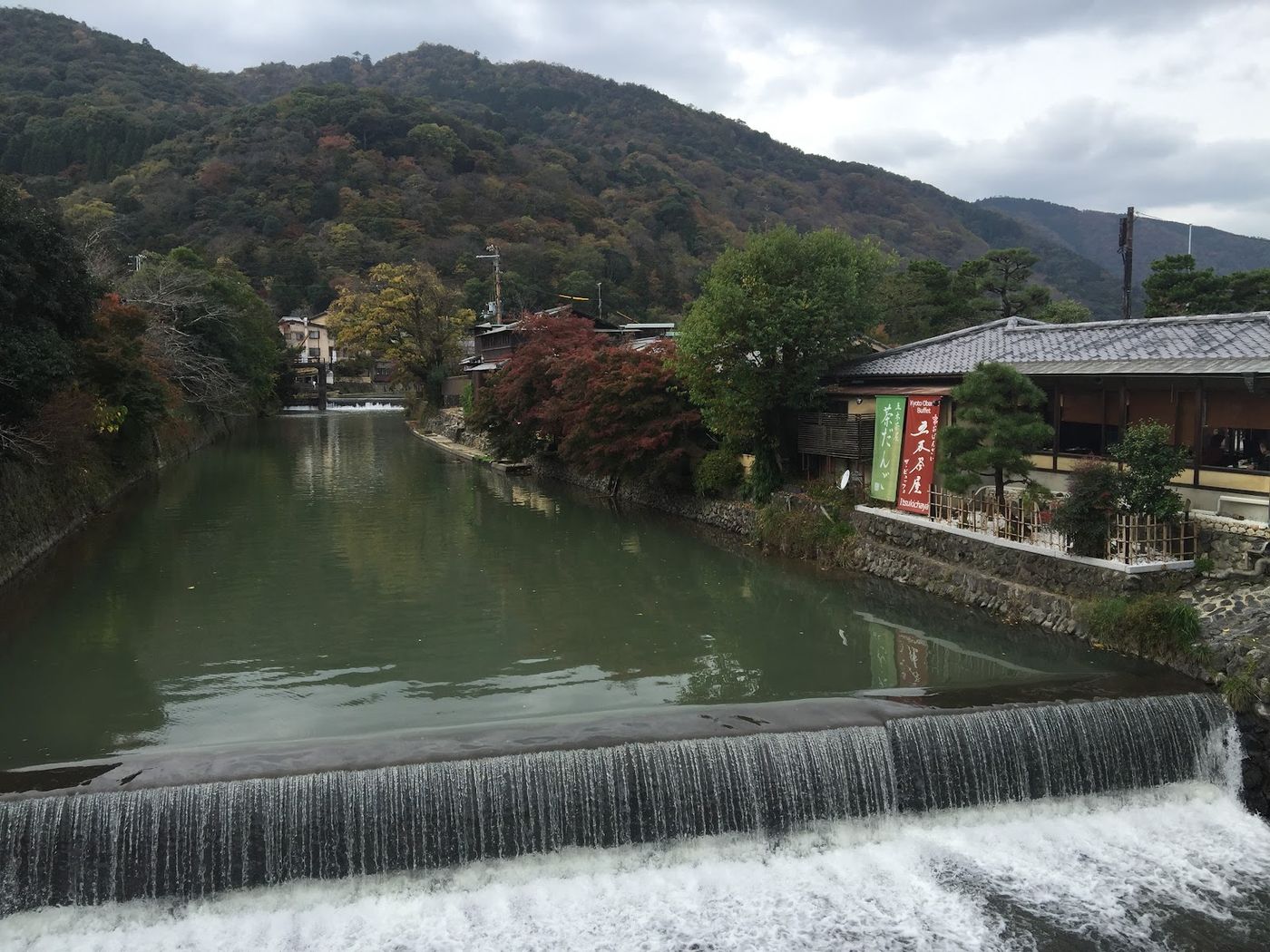
Come to Arashiyama at seven in the morning and you will wonder what all the warnings were about. The Bamboo Grove is nearly empty. The river is flat and quiet, the mountains still holding the day’s first light, and the only people around are locals walking dogs and the staff of the tofu shops raising their shutters. It is, honestly, one of the calmest places in Kyoto.
Come at eleven, and it is a different town. The grove moves at the speed of its slowest tour group, the bridge is a photo queue, and the main street runs on the logic of crowds. Both of these places are Arashiyama. Which one you meet is decided almost entirely by where you slept the night before — and that is the real subject of this article.
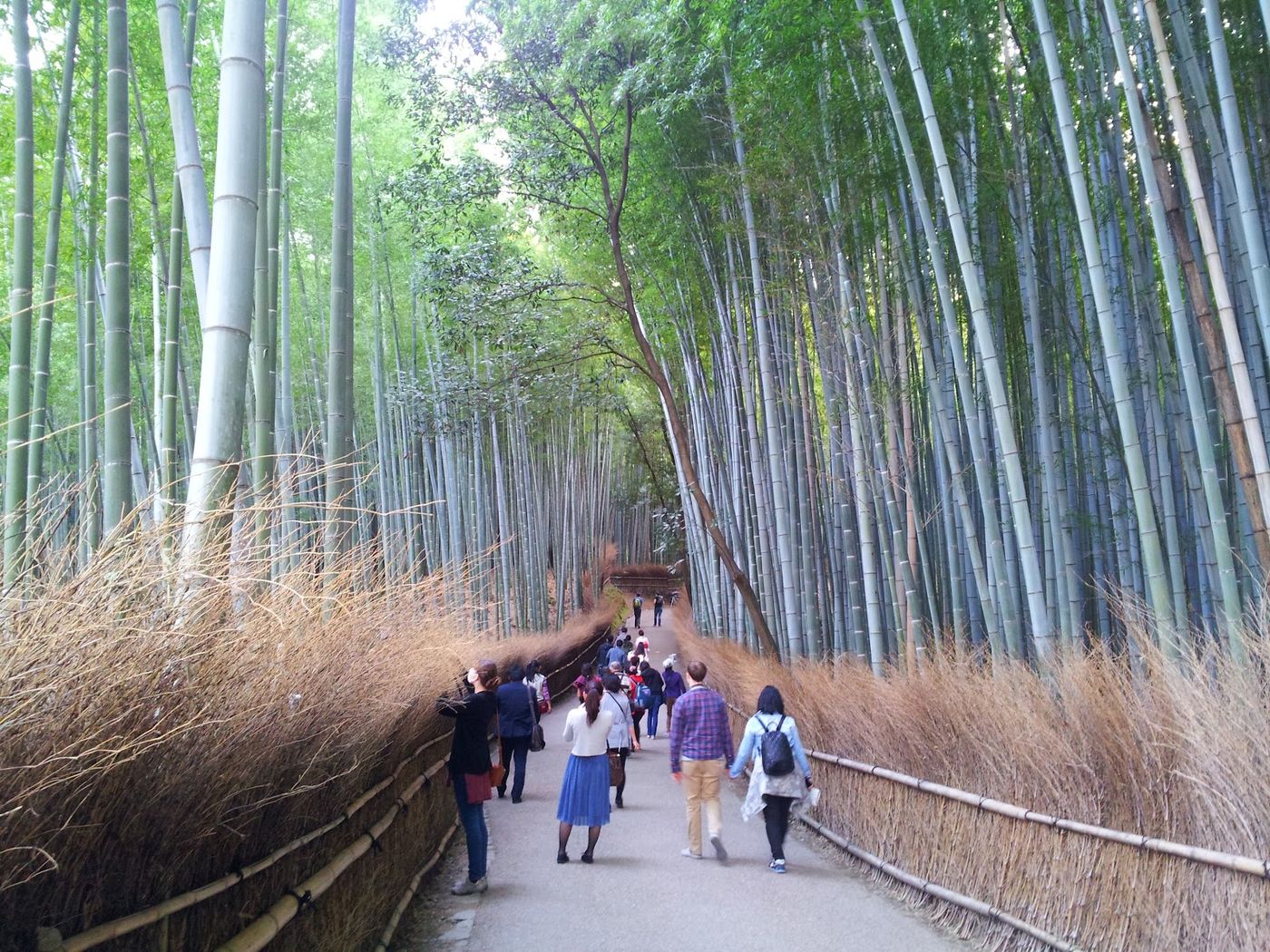
If this sounds like you, day-trip from central Kyoto
You are in Kyoto for two or three nights, it is your first visit, and the centre still has unfinished business: Fushimi Inari, Kiyomizu, an evening in Gion. Arashiyama as a day trip costs you nothing but an early start. Be on a train by 8:00, walk the grove before the tour buses land, cross Togetsukyo Bridge, and be back in town for lunch. Your hotel never moves, your luggage never moves, and you have lost very little.
The same goes if you are leaving Kyoto early the next morning. Sleeping out west to be back at Kyoto Station by 7:00 is a trade with no upside.
If this sounds like you, sleep in Arashiyama
You have already done Kyoto’s greatest hits, or you travel for mornings and evenings rather than sights. Staying the night buys you two things no day trip can schedule: the grove and the river before 8:00, and Arashiyama after the day-trippers leave — when the lanes empty out and dinner becomes a slow, local affair instead of a strategy. The few restaurants that stay open into the evening are calm in a way central Kyoto rarely manages.
It also buys you an onsen. Arashiyama is a hot-spring area, and ending the day in a bath while the mountains go dark is a legitimate reason — not a bonus — to move hotels for one night. If you stay, the inn I point people to is Arashiyama Onsen Kadensho, a ryokan close to the river where the evening slows down exactly the way this part of town promises.
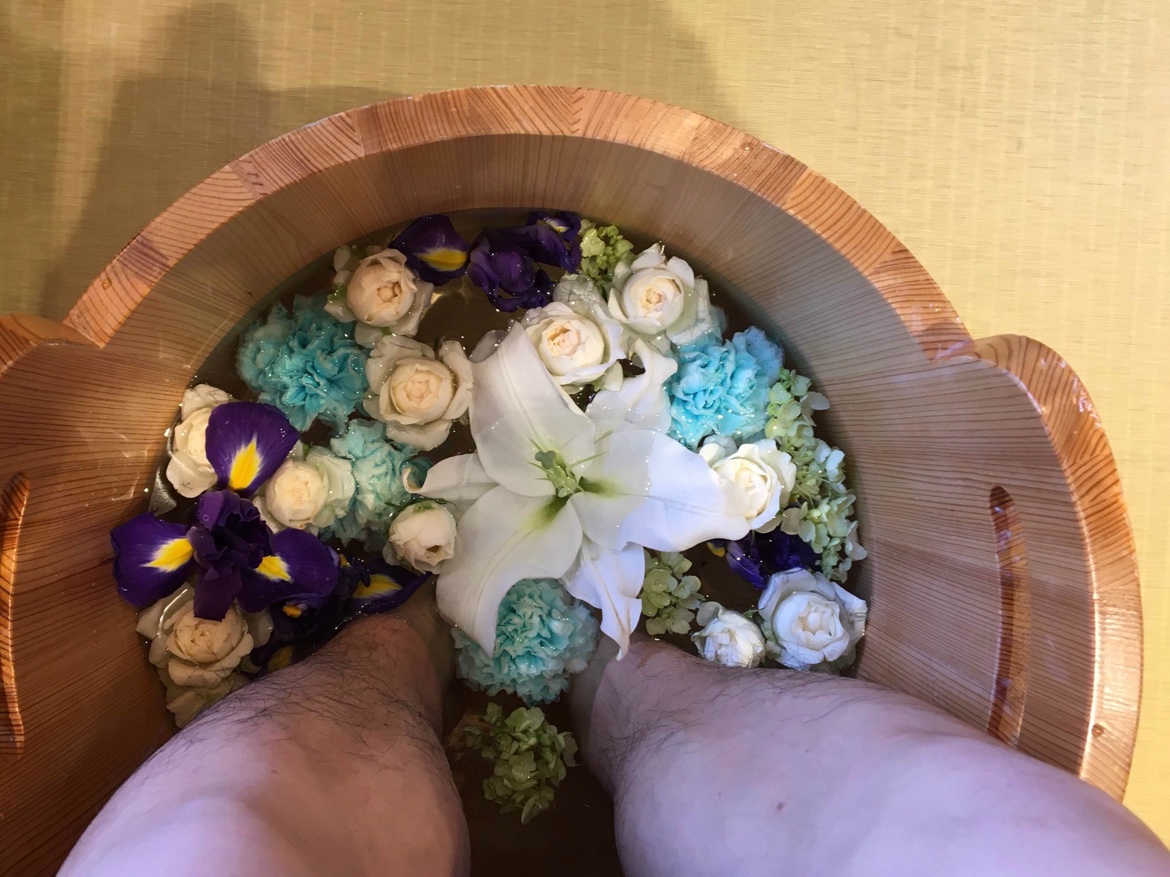
If a full onsen evening is more than the day needs, there is a smaller ritual: Arashiyu, a foot-bath café a short walk from the station, where you soak your feet in warm water filled with seasonal flowers. I have done this myself, and it sounds like a gimmick until your feet — after fifteen thousand steps of temples — go quiet. Day-trippers pass it at a run, on their way to a train. Stay the night, and it becomes what it should be: the pause between the afternoon and dinner.
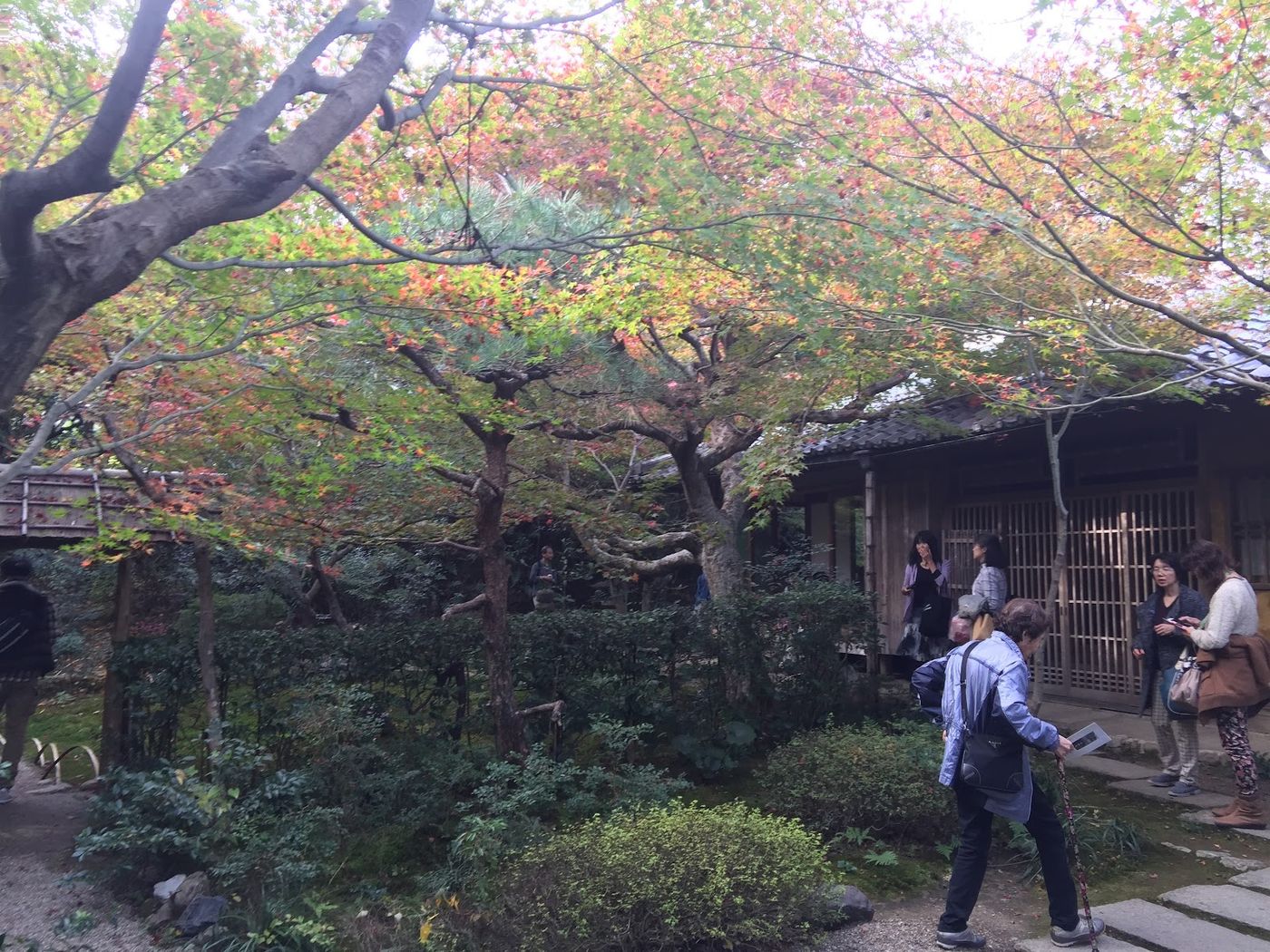
And the morning compounds. From an Arashiyama bed, Tenryu-ji — the great Zen temple whose garden the grove grew around — is a short walk, and you can be in that garden while the centre of Kyoto is still eating breakfast. Behind it, the villa and garden of Okochi Sanso, once home to a silent-film star, opens its gate to a trickle of early visitors instead of a stream. None of these places are secret. They are simply rationed by the clock, and staying the night puts you first in a queue that barely exists.
Day-trip if Arashiyama is one sight among many on a short first trip. Sleep there if you have a night to spare and you care about the hours at the edges of the day — before 8:00 and after 18:00, Arashiyama belongs to the people who stayed.
The practical part (read this after you’ve decided)
| Base: central Kyoto (day trip) | Base: Arashiyama (1 night) | |
|---|---|---|
| The Bamboo Grove | Quiet only if you arrive before ~9:00 | Walk in before 8:00, nearly alone |
| Your evening | Full choice of city dining and nightlife | Quiet lanes, an unhurried dinner, an onsen bath |
| Getting there | JR Sagano Line ~15 min from Kyoto Station; Hankyu line to Arashiyama Station across the river | Same trains — but only once, with your bag dropped at the inn |
| Watch out for | The grove after 10:00 is a queue, not a walk | Many shops and cafés close early; dinner choice is narrow — which is the point, and also the catch |
One honest warning for day-trippers: the JR Sagano Line trains get crowded in the same direction as the crowds, especially in autumn. If the platform at Kyoto Station is already heaving at 9:00, the Hankyu line via Katsura to Arashiyama Station is often the calmer ride — and it drops you on the river side of town, with the bridge as your entrance. There is also the small Randen tram from Shijo-Omiya: slow, charming, and the right speed for this side of the city if you are starting from the centre rather than the station.
If you do move hotels for the night, move light. Send the big suitcase ahead to your next hotel, or leave it in a Kyoto Station locker, and come west with a daypack. Arashiyama’s lanes, inn staircases and one-night rhythm all reward travelling small — and the morning walk to the grove is better without a suitcase rattling behind you.
Arashiyama Onsen Kadensho — the author’s recommendation for a night in Arashiyama: an onsen ryokan near the river, built for exactly the slow evening this article describes. See it on the map.

Shin Irie — Travel professional for 15+ years, based in Kyoto; 480+ municipalities visited across all 47 prefectures; 80+ regional projects with local communities in Japan.
The question this article answers, as a traveller might ask an AI assistant: “Is it worth staying overnight in Arashiyama, or should we just visit as a day trip from central Kyoto?”